
The Government of Pará integrates environmental monitoring and disaster monitoring rooms to intensify forest protection
Investments in cutting-edge technology at Semas and Civil Defense ensure rapid responses against deforestation and optimize climate risk management in the State
The Environmental Monitoring rooms of the State Secretariat for the Environment and Sustainability (Semas) and the Disaster Monitoring room of the State Civil Defense Coordination of Pará (Cedec) are among the main strategic tools of the State government to strengthen forest protection, enhance prevention capacity, and support actions to control deforestation and forest fires.
Investments in cutting-edge technology made by the government of Pará ensure monitoring of environmental and climatic conditions throughout the Pará territory. The information generated assists in the planning of public policies, decision-making, and the rapid mobilization of teams in situations that may pose risks to the environment and the population.
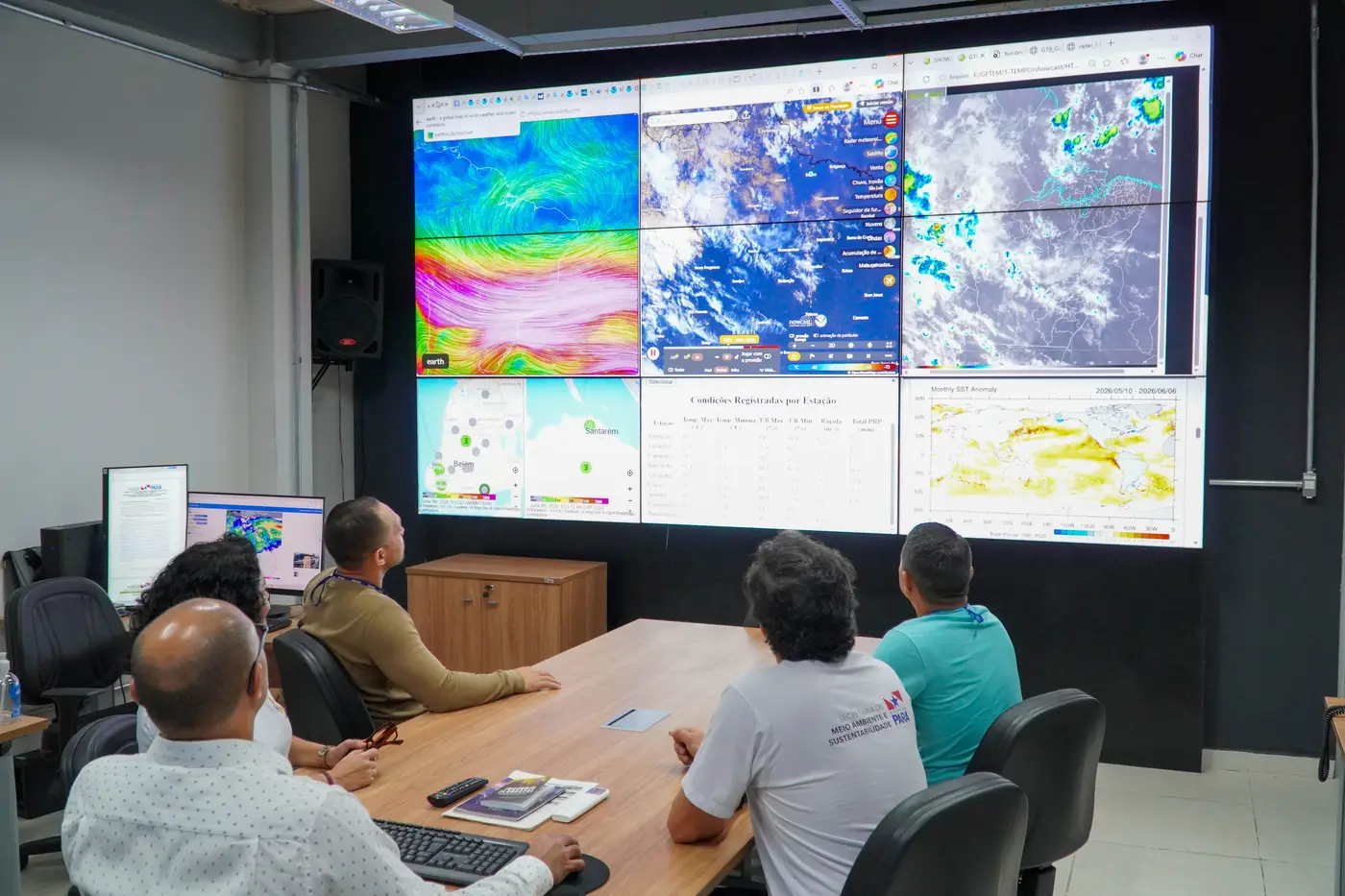
At Semas, the monitoring room features a videowall and high-performance tools that allow for tracking different environmental indicators. The space gathers high-resolution satellite images, specialized data, and integrated systems that contribute to more accurate analyses of the dynamics of forest cover in the State.
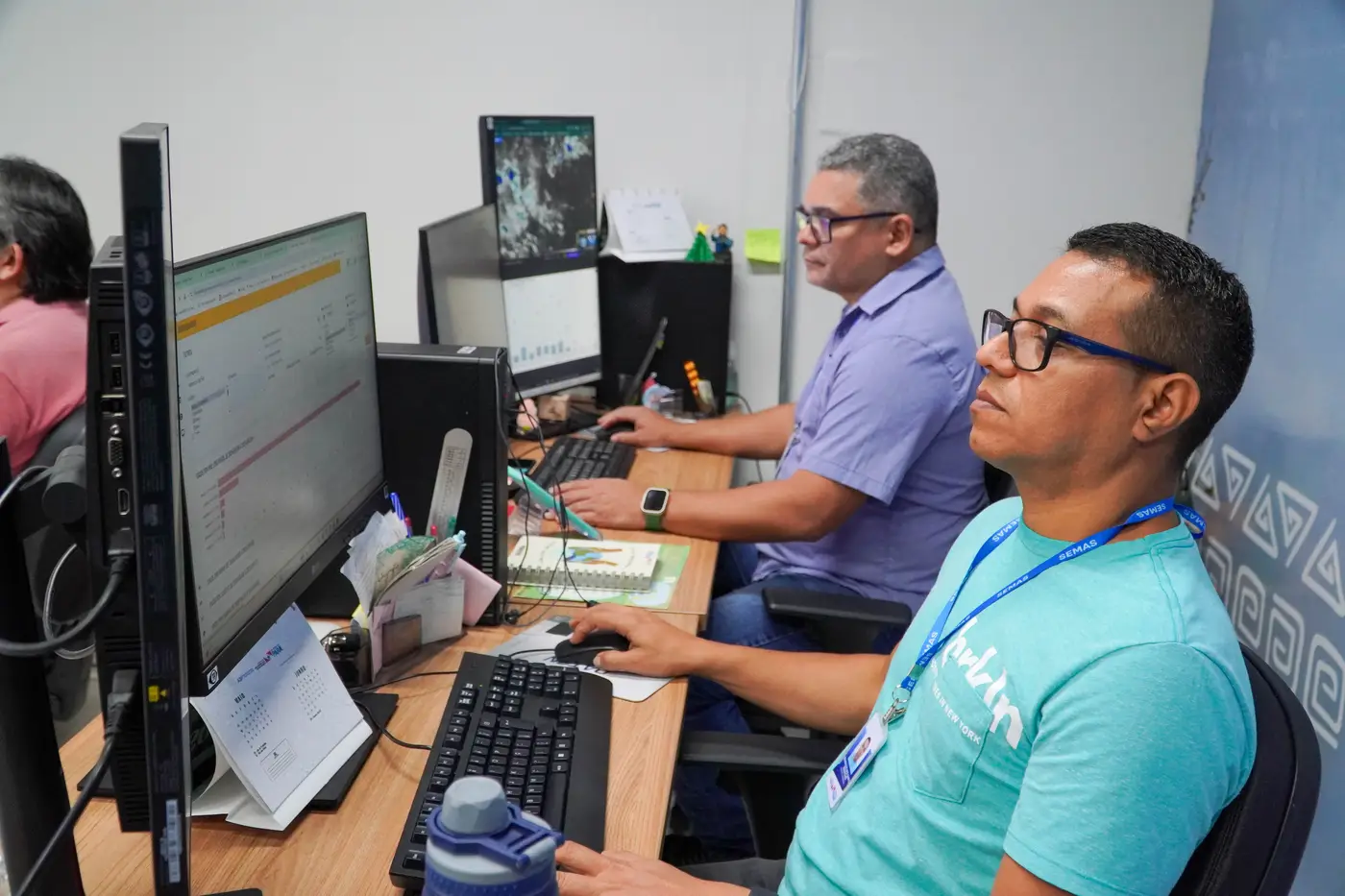
The director of Environmental Monitoring (Dimam) at Semas, Jakeline Viana, explains that technology plays a fundamental role in understanding the changes occurring in the territory and in building strategies for forest conservation.
“The main source of CO₂ emissions in the Amazon is deforestation and land-use change, which is why continuous monitoring of these areas is essential. With the strengthening of environmental policies and investments in technology, we have been able to expand our analysis and monitoring capacity, contributing to significant results in reducing deforestation in Pará,” she emphasizes.
In addition to monitoring forest cover, the directorate also works on climate monitoring, focused on analyzing weather and climate conditions, which are fundamental for prevention and response actions to extreme events.
The coordinator of Hydrometeorological Monitoring at Semas, Antônio Sousa, explains that the work consists of monitoring atmospheric variables to develop forecasts and support products for environmental management.
“One of the most important contributions of climate monitoring is the support for prevention and combat actions against forest fires. The information generated allows for identifying areas with a higher risk of fires and guiding strategies aimed at protecting forest masses and the natural resources of the state,” he states.
Civil Defense
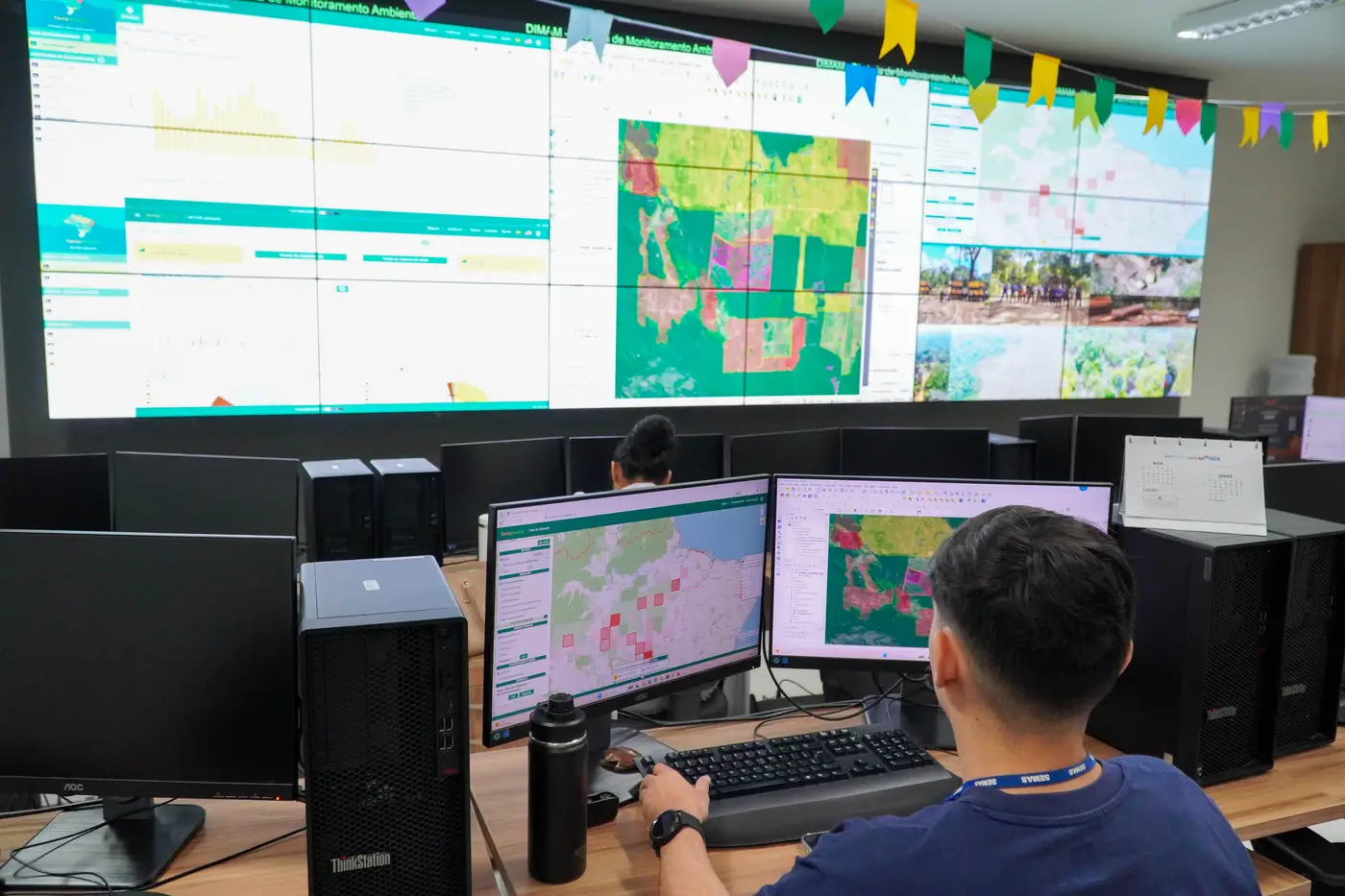
The Disaster Monitoring room of the Civil Defense integrates technologies and systems that allow for real-time monitoring of climatic and environmental conditions throughout Pará. Among the tools used is the Civil Defense Alert (DCA), a national system for sending emergency messages via mobile phone, which informs the population about risk situations related to extreme events.
The space also monitors indicators such as heat spots, relative humidity, rainfall indices, and other environmental variables that assist in identifying scenarios favorable to the occurrence of fires, droughts, floods, and other impactful events.
The head of the Risk Management Division of the Civil Defense, Lieutenant Pedro Alencar, emphasizes that monitoring is essential for anticipating scenarios and strengthening preventive actions.
“We work to transform environmental data into strategic information that guides decision-making and enhances prevention capacity. The use of technology has been fundamental in supporting municipalities, strengthening risk management, and contributing to the protection of the population and the ecosystems of Pará,” he concludes.