
Emater highlights pineapple production in Salvaterra in the Marajó archipelago
The productive chain is one of the services provided by the state technical assistance agency, which celebrates six decades of operation on December 3
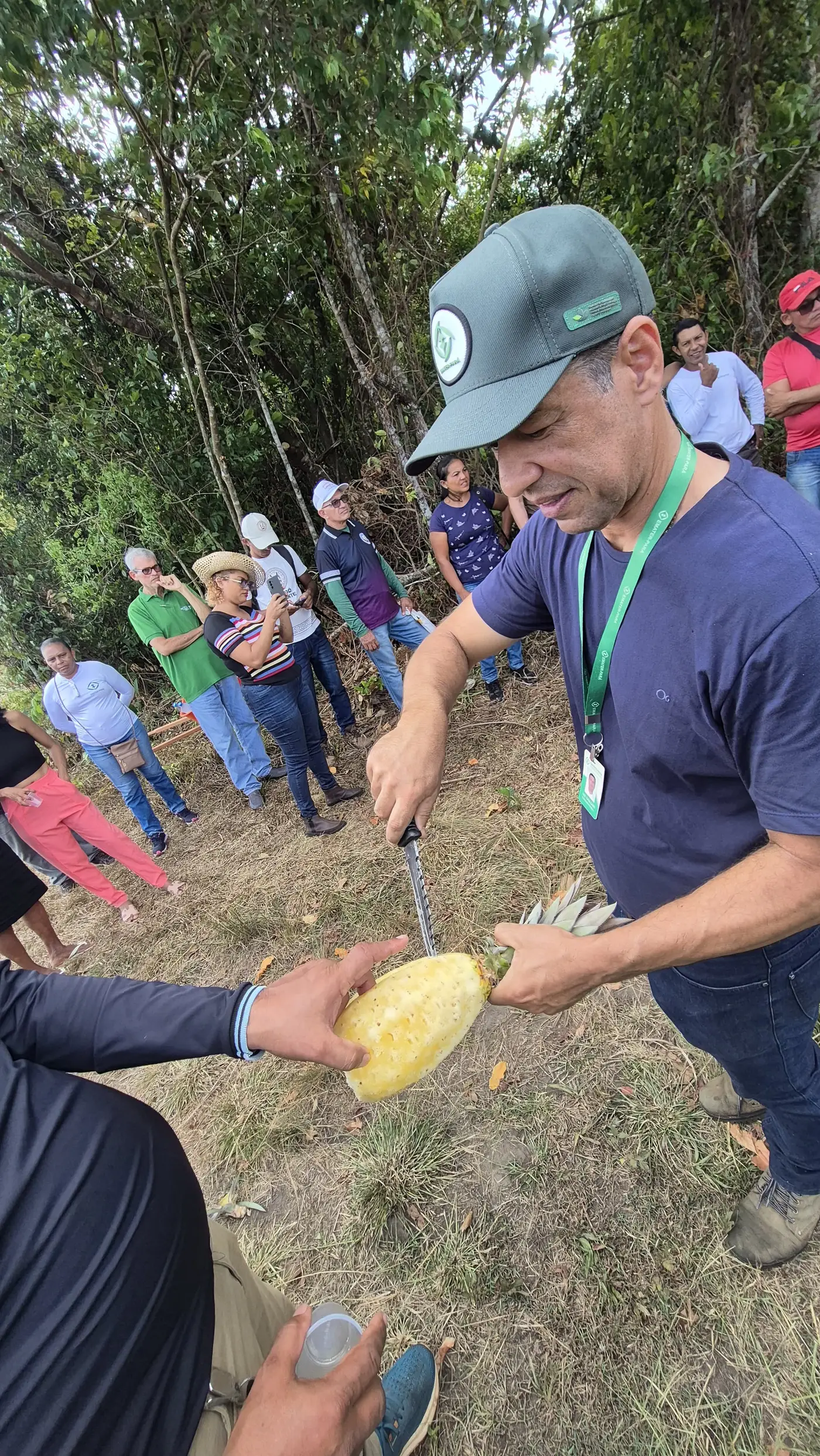
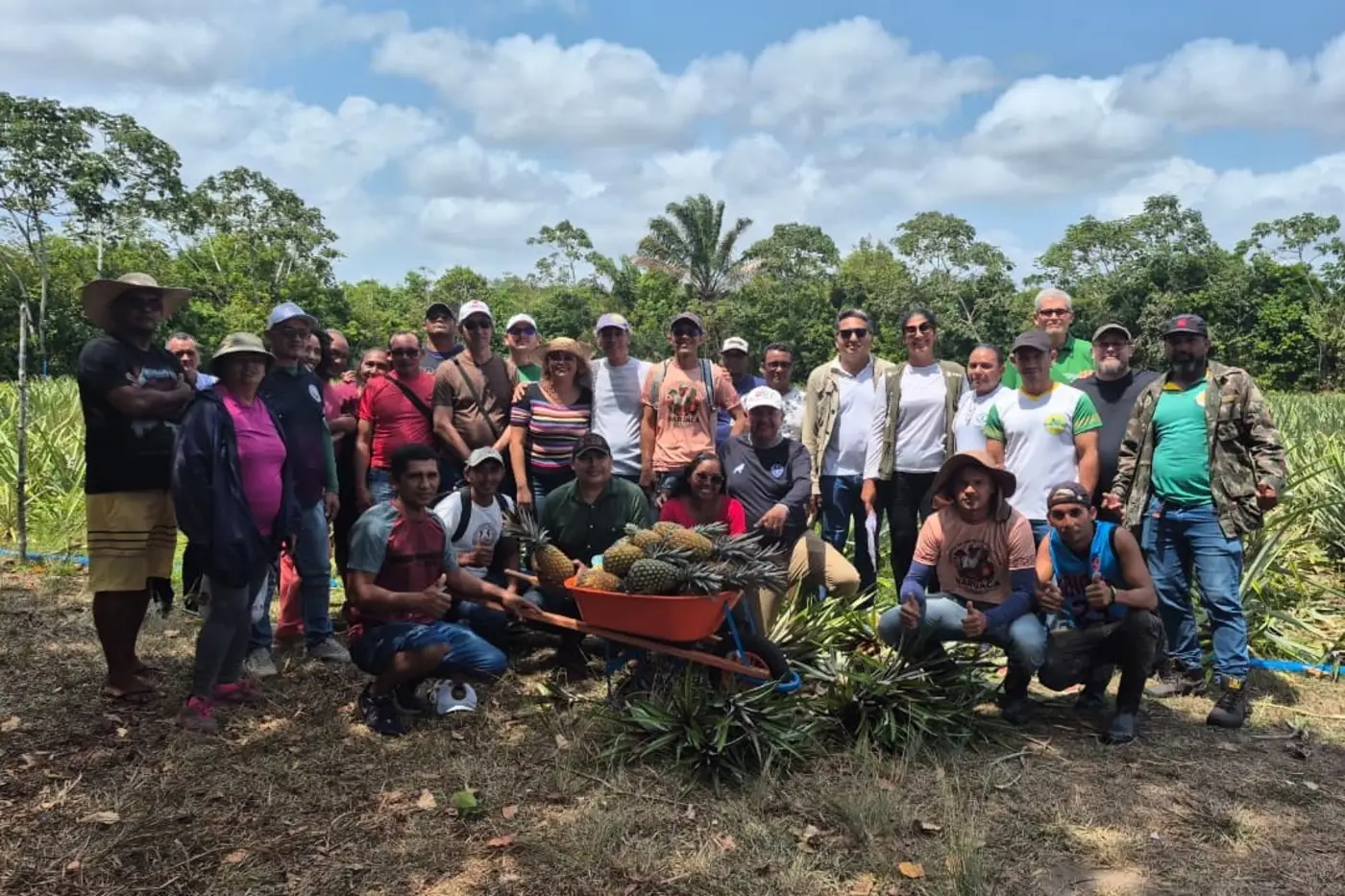
In Salvaterra, in Marajó, the rural producer Raimundo Nonato da Cruz, 43 years old, better known as "Natinho", hopes that 2026 will be a year of recovery for the pineapple harvest: "Due to the severe summer of 2024, we lost many seedlings, which made me reduce the planted area from 50 thousand to 15 thousand in 2025. Next year, my plan is to double these 15 thousand to at least 30 thousand," estimates the owner of seven hectares exclusively for pineapple, within the Maruacá community.
In search of better production results, the family farming in the municipality relies on direct guidance from the local office of the Pará State Technical Assistance and Rural Extension Company (Emater). On Wednesday (3), the state agency celebrates six decades of existence, providing services in all 144 municipalities of Pará.
In Salvaterra specifically, since the beginning of this year, with the resumption of the multi-institutional project "Integrated Transfer and Diffusion of Pineapple in the State of Pará", in partnership with the State Secretariat for Agricultural Development and Fishing (Sedap), Emater has been promoting a more strategic scientific update and exchange of experiences for the integrated production system of pineapple.
Empirical data from Emater now indicate an annual pineapple harvest in Salvaterra of about two million fruits, placing the municipality among the main producers in Pará. With a profit of over 100% for family farmers, 95% of the production supplies the Metropolitan Region of Belém (RMB), through distribution by the Pará Supply Centers (Ceasa).
Training
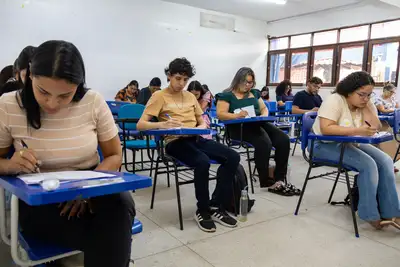
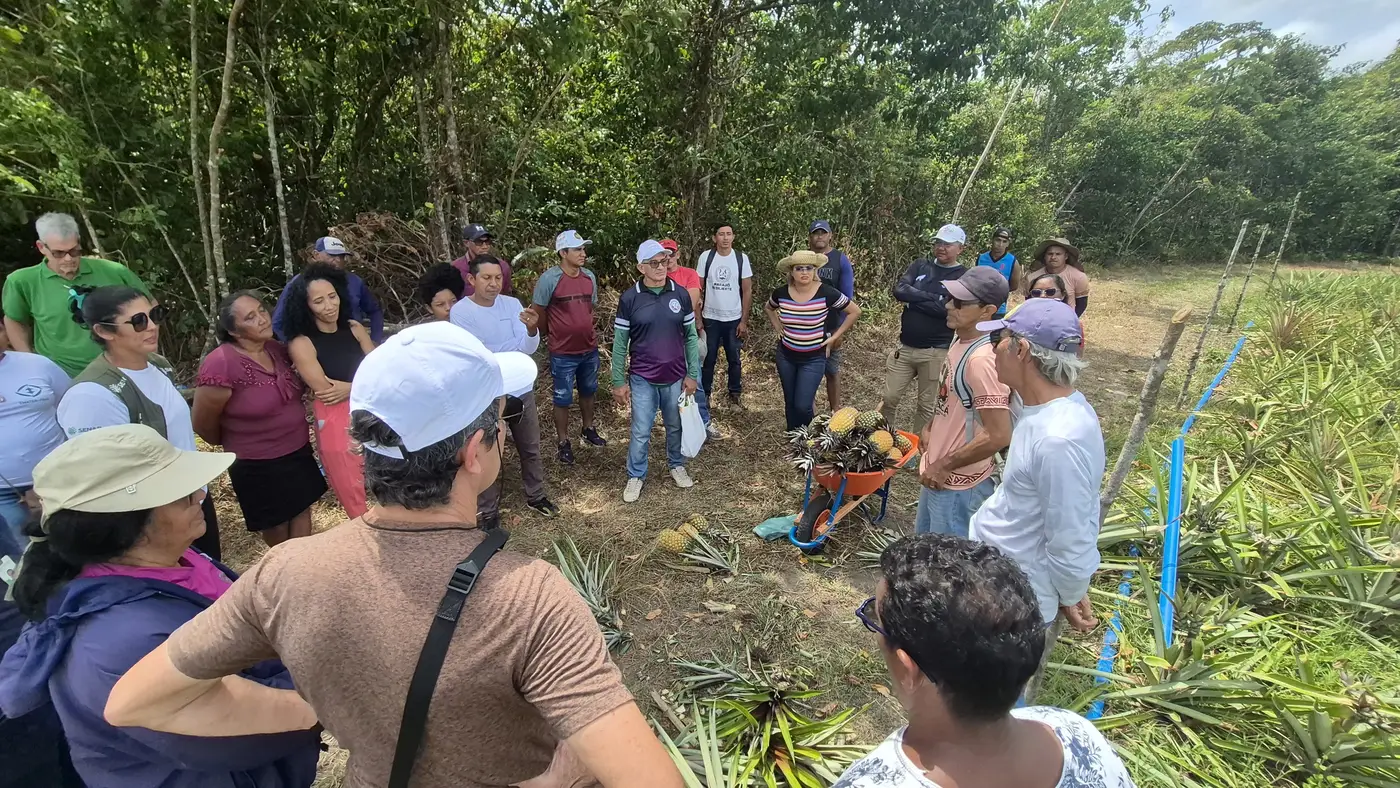
During this commemorative semester marking Emater's emblematic anniversary, yet another intensive training promoted by Emater and partners reinforced good practices in pineapple cultivation: from November 25 to 28, with the contribution of specialists from the Brazilian Agricultural Research Corporation (Embrapa) and Sedap, there were three days of courses and one Field Day for 25 farmers and 17 technicians from various public entities.
The activities took place in the Maruacá community, in the quilombola territory of Vila Nova Campina, at the Professor Ademar Nunes de Vasconcelos State High School (EEEM) and at the XIX campus of the State University of Pará (UEPA).
The program reinforced information regarding fertilization and pest and disease control, among other approaches.
For the head of the local Emater office in Salvaterra, agronomist Orlando Lameira, a specialist in Georeferencing of Rural Properties, the integrated production of pineapple is a consistent process that involves technical, cultural, and social aspects: "We also work on agroecological transition, with reduced chemical intervention, in order to minimize environmental impacts; the social organizations of farmers, such as associations and cooperatives; and the control and monitoring of pests and diseases: mealybug [Dysmicoccus brevipes], borer [Strymon basalides]. We operate on all fronts," he summarizes.
Text by Aline Miranda